
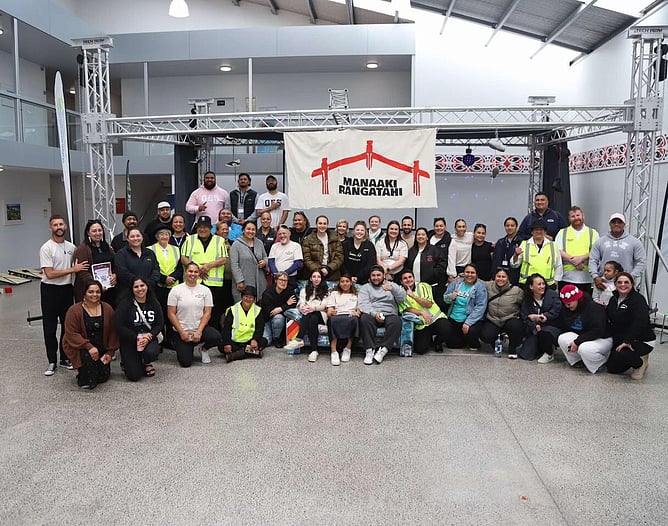
Bianca Johanson (everyone calls her Bee) (Te Rarawa, Ngāti Wairupe) has spent nearly 30 years as a social worker in Auckland. In that time, she has watched young people fall through the cracks of a system that was never really designed with them in mind. Government agencies, housing providers, health services, welfare departments: all doing their part, but without the capacity to talk to each other, and to the young people themselves.
In 2019, Bee took on the role of coordinator of Manaaki Rangatahi, a collective building a joined-up, nationwide response to youth homelessness. The Collective’s membership grew from around 60 people in Tamaki to now becoming a national collective with over 300 people and many organisations involved.
In 2019, there were fewer than ten dedicated beds in Auckland for young people that were not eligible for Oranga Tamariki transitions housing. Youth homelessness was barely on the political agenda. There was no national strategy, no reliable data, and almost no coordination between the organisations trying to help.
The scale of the problem was larger than most people realised. A recent government report estimated that over half of the 110,000 New Zealanders living in housing insecurity are under 25. But because most young people experiencing homelessness are couch-surfing or in overcrowded homes rather than sleeping rough on city streets, the issue stays largely invisible and expensive. Unstable housing in adolescence is one of the strongest predictors of long-term welfare dependency, poor health outcomes, and contact with the justice system. The cost of inaction compounds over decades.
The Collective’s insight was simple: the organisations already working on this problem needed to stop duplicating effort and start sharing what they knew.
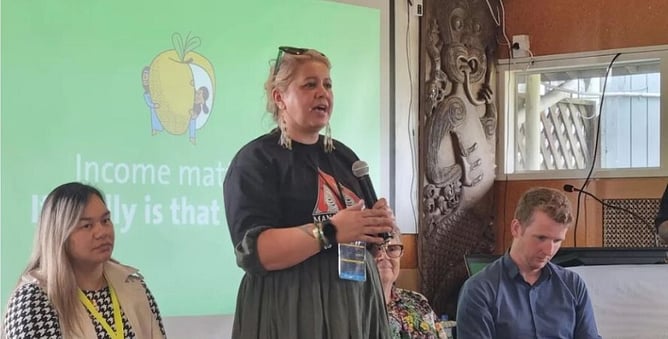
Manaaki Rangatahi brings together housing providers, frontline services, government agencies, and young people themselves around a shared table. The kaupapa (purpose) is practical: pooling knowledge, coordinating resources, and making the system work better for rangatahi (young people) falling through its gaps. Member organisations include VOYCE Whakarongo Mai, Auckland City Mission, LifeWise, Ma te Huruhuru, Grace Foundation, MANA Services, RainbowYOUTH, VisionWest, Ki Tua o Matariki, Ola Le Ola, Tuatahi Trust, Ngāpuhi Iwi Social Services, Strive Community Trust, and Lifeskills, among others. Together they support all rangatahi experiencing housing insecurity, connecting young people to counselling, education, employment, and development services alongside safe housing.
The model has produced impressive results.
When Māhera Maihi (Ngāpuhi, Ngāti Whātua, Muriwhenua) approached the collective to set up a youth housing programme, she had passion and lived experience but no housing provider experience. The collective got behind her. Established NGOs lent their credibility to her application. The collective shared its processes and knowledge. Two years later, He Pā Piringa at Ma Te Huruhuru opened as the country’s first Kaupapa Māori youth transitional housing programme.
An 18-bedroom gated community for 17- to 21-year-olds, it operates as a supportive village, with communal spaces, 24/7 staff, and an intensive 52-week programme built around cultural connection, healing, and the practical skills young people need to live independently. Its outcomes have been remarkable: no property damage, no police callouts, and a high rate of young people moving on to permanent housing, with ongoing support available even after they leave. It has since become a blueprint that other providers around New Zealand are trying to replicate.
“We helped support her to become a youth housing provider” Bee says. “And you know the rest is history.”
From there, Manaaki Rangatahi successfully advocated for a government funding round that opened up new youth housing across the country. They commissioned the first dedicated research into youth homelessness.
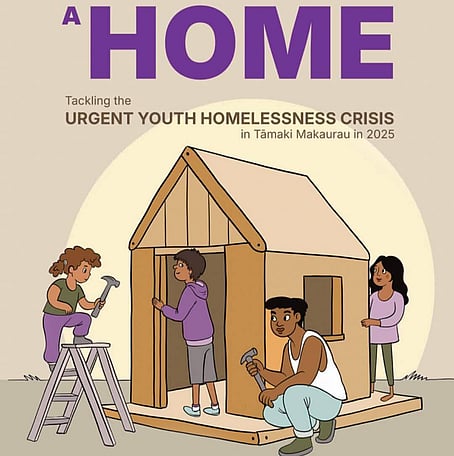
They contributed to a government Homelessness Action Plan that had originally given youth barely a paragraph. They developed a coordinated access system that shares housing availability among providers in real time, matching young people with beds rather than leaving them to navigate the system on their own.
In Auckland alone, there are now around 200 spots for young people, up from fewer than ten.
All of this has been achieved with 2.5 staff members and the dedication of collective members/providers.
The Todd Foundation was privileged to support Manaaki Rangatahi at a pivotal moment when it was establishing itself as an independent organisation. The support went beyond funding: help setting up a charitable trust, introductions to legal and financial expertise, connections to other funders, and a reporting relationship that Bee describes as genuinely collaborative.
Manaaki Rangatahi receives no government funding, despite doing the work of a national peak body. However, with further philanthropic investment, the collective has grown its reach to the Waikato, Wellington, Napier, Kaikōhe and Christchurch.
The national collective has now reached another pivotal moment. Demand from communities across Aotearoa to establish local youth housing support is growing faster than a 2.5-person team can meet. With greater capacity, Manaaki Rangatahi could place dedicated coordinators in more regions, accelerating the development of local collectives and helping communities get their own youth housing initiatives off the ground sooner.
The goal is a nationwide network where no young person, wherever they live, falls through the gaps.
The next chapter is focused on prevention, the most cost-effective intervention of all. Manaaki Rangatahi is working with Members of Parliament on legislation that would prohibit government agencies from discharging young people into homelessness, similar to laws already operating successfully in Wales and Ireland. A youth street outreach programme launches in 2026. And Bee is clear about the destination.
“We want to leave our children a New Zealand with no youth homelessness. We believe it is within our reach. We can make homelessness rare, brief, and non-recurring. We can do it if we work collectively.”
Hundreds of young people have somewhere safe to sleep tonight because of the collective impact work of Manaaki Rangatahi and the returns for those young people and for New Zealand, will compound for decades.
*Image above from “The Women’s Coalition to end homelessness symposium 2026”

